
Leave Only Footprints is an environmental ethos encouraging visitors and residents to minimise their impact on natural places by avoiding litter, damage, and disturbance. It promotes responsible outdoor behaviour to protect landscapes, wildlife, and heritage for future generations. This page explains what Leave Only Footprints means in practice, how it applies locally, and ways to follow its principles in Bournemouth and beyond.

What Leave Only Footprints means in practice
The core idea of Leave Only Footprints is to enjoy outdoor spaces without leaving any lasting harm. This means not dropping litter, staying on marked paths to prevent erosion, not disturbing plants or animals, and taking all waste home. It also involves respecting local rules, such as fire bans or dog restrictions, and avoiding noise or behaviour that spoils others’ experience.
The principle is often summarised as: take only photographs, leave only footprints. This encourages visitors to capture memories without removing natural or cultural features. It also reminds people to tread lightly, literally and figuratively, on the environment.
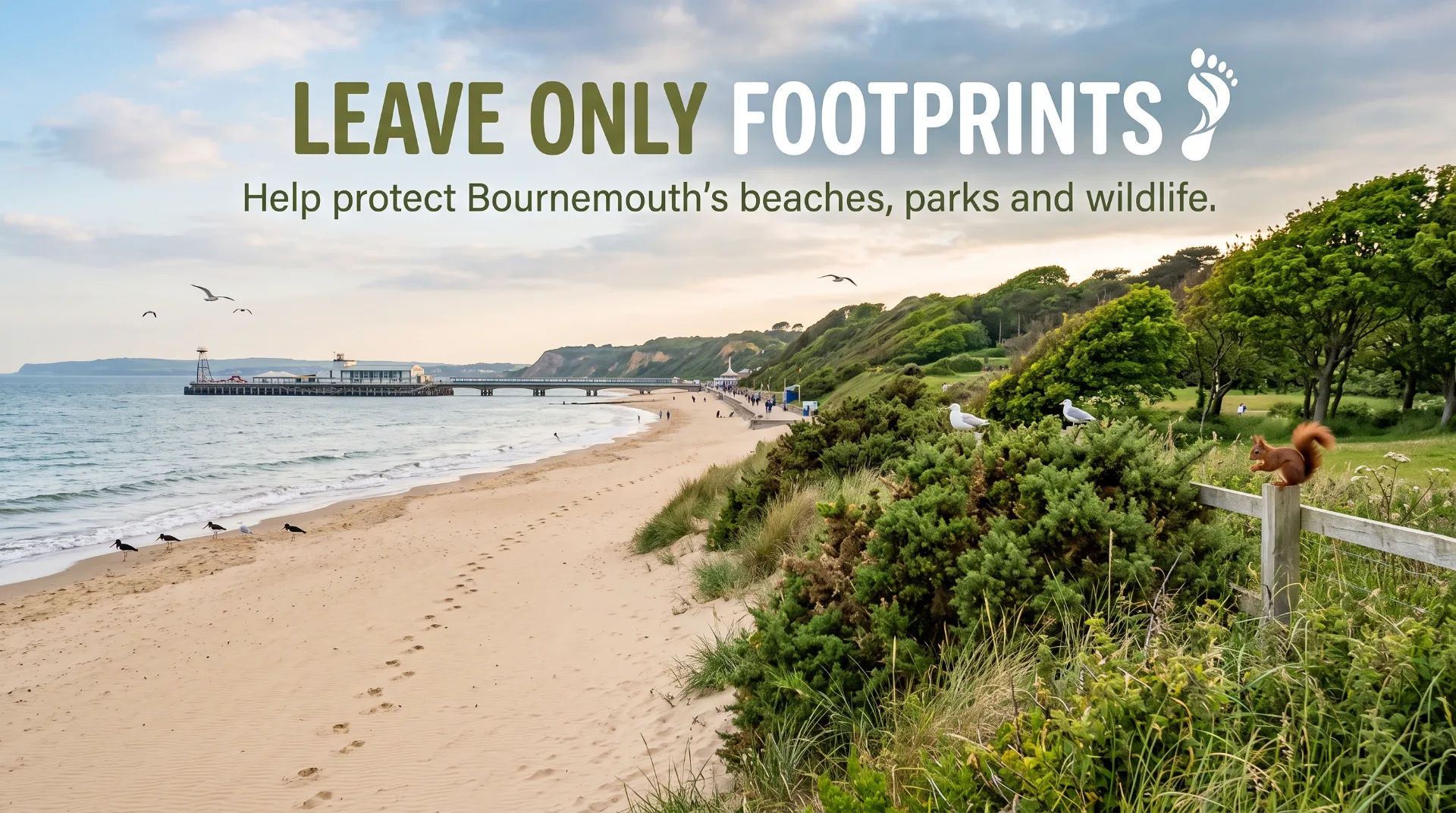
In Bournemouth, this approach helps maintain the town’s seven miles of sandy beaches, parks, and nearby natural reserves. It supports the work of local conservation groups and the council, which organise regular beach cleans and habitat restoration projects. Following Leave Only Footprints helps keep these areas safe and attractive for wildlife and people alike.
Adopting this ethos means thinking beyond just the immediate surroundings. It involves considering how your actions affect the wider environment, including marine life, local ecosystems, and even the climate. For example, choosing sustainable transport options to reach Bournemouth’s natural sites reduces carbon emissions, while selecting eco-friendly products minimises pollution.
How to follow Leave Only Footprints on Bournemouth’s beaches
Bournemouth’s beaches are a major attraction and require careful stewardship to remain clean and accessible. Visitors can contribute by:
- Using the many bins provided along the seafront for all rubbish, including cigarette butts and food packaging.
- Avoiding single-use plastics and bringing reusable containers for drinks and snacks.
- Taking all belongings and waste home if bins are full or not nearby.
- Keeping dogs on leads where required and cleaning up after them.
- Staying off sand dunes and protected vegetation to prevent erosion.
- Respecting lifeguard instructions and safety signs to protect both people and wildlife.
The Royal National Lifeboat Institution (RNLI) provides lifeguard cover on Bournemouth’s main beaches during the summer months, and their advice includes looking after the environment as part of safe beach use. The beaches regularly achieve Blue Flag status, recognising high standards of cleanliness, facilities, and environmental management.
Why sand dunes and vegetation matter
The sand dunes along Bournemouth’s coastline are vital natural features. They act as barriers against coastal erosion and provide habitats for specialised plants and animals. Walking on dunes can damage the vegetation that holds the sand in place, increasing the risk of erosion and habitat loss. By sticking to designated paths and boardwalks, visitors help preserve these fragile ecosystems.
Dealing with beach litter responsibly
Litter on beaches not only spoils the scenery but poses a serious threat to marine life. Plastic debris can be ingested by seabirds, fish, and turtles, causing injury or death. Bournemouth’s commitment to cleanliness is supported by regular beach cleans organised by community groups and volunteers. Visitors are encouraged to join these efforts or simply pick up any litter they see during their visit.
Safe and sustainable beach activities
Enjoying Bournemouth’s beaches responsibly also means choosing activities that do not harm the environment. For example, using reef-safe sunscreen protects marine ecosystems, while avoiding disturbing nesting birds or seals maintains wildlife wellbeing. Water sports should be practised in designated areas to minimise conflict with wildlife and other beach users.
Leave Only Footprints in Bournemouth’s parks and green spaces
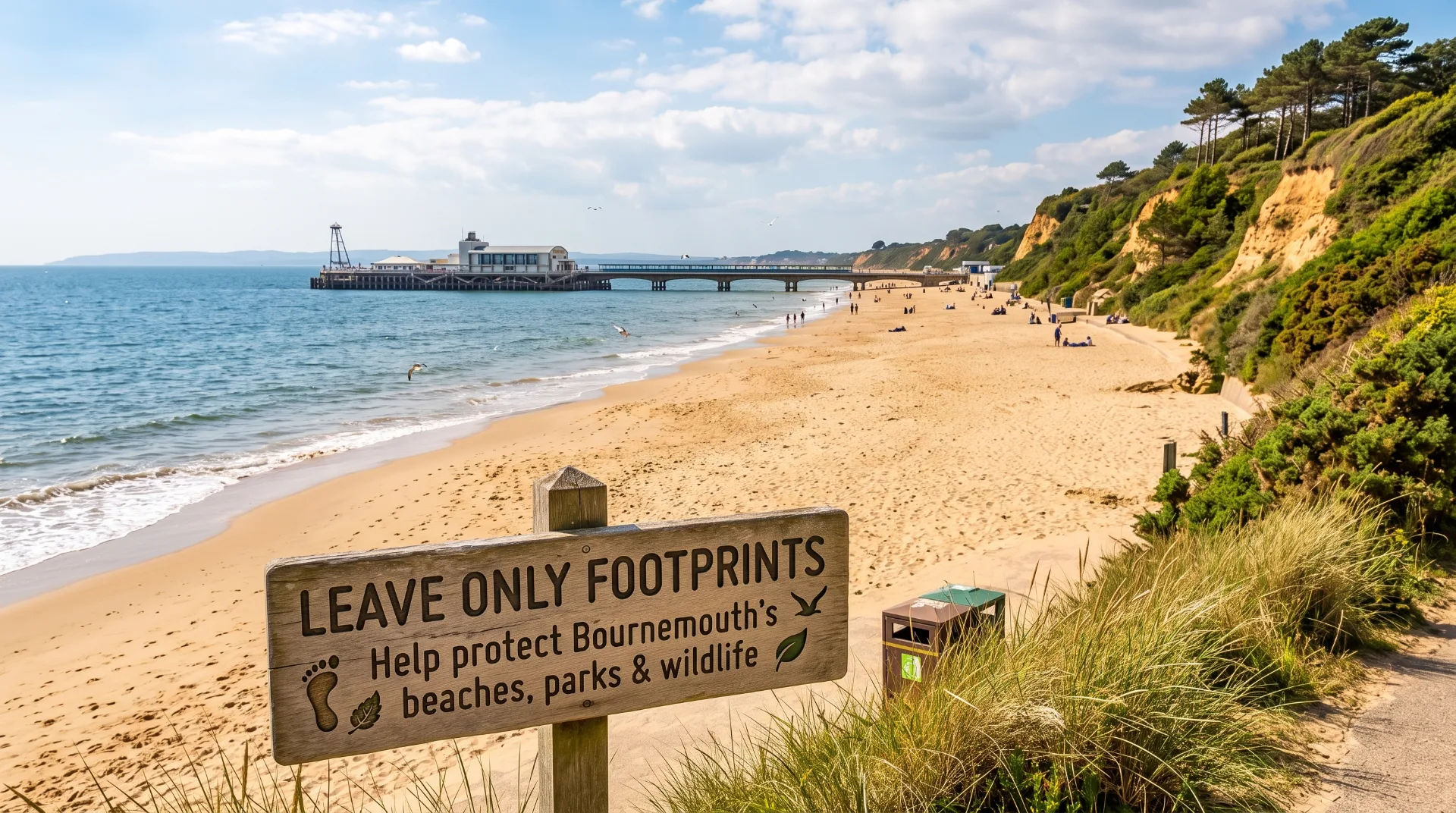
Beyond the coastline, Bournemouth has extensive parks such as Lower Gardens, Central Gardens, and Meyrick Park. These areas benefit from Leave Only Footprints practices by visitors who:
- Dispose of litter in bins or take it home.
- Keep to paths and avoid trampling flower beds or grass areas.
- Respect wildlife habitats and avoid feeding wild animals.
- Observe dog control rules and clean up after pets.
- Use designated picnic areas and barbecues where allowed.
The council and local groups maintain these parks with regular gardening and conservation work. Responsible visitor behaviour reduces damage and helps preserve these green spaces for community use and events throughout the year.
Protecting wildlife in urban green spaces
Bournemouth’s parks are home to a variety of wildlife, from birds and insects to small mammals. Feeding wild animals can disrupt their natural behaviour and diet, sometimes leading to health problems. Observing wildlife from a distance and not disturbing nests or burrows helps maintain healthy populations.
The role of community in park conservation
Local volunteer groups often assist the council with conservation tasks such as planting native species, clearing invasive plants, and maintaining paths. Participating in these activities or simply following park guidelines contributes to the long-term sustainability of these green spaces, ensuring they remain enjoyable for everyone.
How Leave Only Footprints supports local heritage and wildlife
Bournemouth lies close to important natural and historic sites, including parts of the Jurassic Coast World Heritage Site and National Trust properties nearby. Visitors following Leave Only Footprints help protect these areas by:
- Not removing fossils, plants, or artefacts from protected sites.
- Keeping to designated trails and avoiding cliff edges or unstable ground.
- Reporting any damage or concerns to local authorities or conservation groups.
- Participating in organised volunteer activities such as beach cleans or habitat surveys.
Respecting heritage and wildlife ensures these resources remain intact for scientific study, education, and enjoyment. It also supports Dorset’s wider tourism economy, which depends on well-maintained natural and cultural attractions.
The significance of the Jurassic Coast
The Jurassic Coast is a UNESCO World Heritage Site stretching along Dorset’s coastline, famous for its geological formations and fossil discoveries. Bournemouth’s proximity to this area means visitors often explore its beaches and cliffs. Leaving only footprints here protects irreplaceable fossils and geological features that tell the story of Earth’s history.
Reporting damage and concerns
If visitors notice vandalism, illegal collecting, or environmental damage, reporting it promptly helps authorities take action. Local conservation groups and BCP Council provide channels for reporting issues, ensuring that problems are addressed before they worsen.
Getting involved with Leave Only Footprints activities in Bournemouth
Several local organisations promote Leave Only Footprints values and offer opportunities to get involved, including:
- Bournemouth Beach Care, which coordinates beach clean events and awareness campaigns.
- Dorset Wildlife Trust, active in habitat conservation and citizen science projects.
- The BCP Council, which provides information on responsible outdoor behaviour and organises community initiatives.
- National Trust sites nearby, which welcome volunteers for conservation and education work.
Joining these groups or attending events helps deepen understanding of local environments and contributes directly to their protection. It also connects residents and visitors with the community of people committed to sustainable use of Bournemouth’s natural assets.
Volunteering opportunities
Volunteering can range from one-off beach cleans to ongoing habitat management or educational outreach. These activities provide hands-on experience and foster a sense of stewardship. Many groups welcome people of all ages and experience levels, making it easy to get involved.
Educational programmes and events
Local organisations often run talks, guided walks, and workshops that explain the importance of Leave Only Footprints and how to apply it. Participating in these events enriches your visit and helps spread awareness among friends and family.
Where to find more information on responsible outdoor behaviour
For detailed guidance on Leave Only Footprints principles, the official website of Leave Only Footprints (leaveonlyfootprints.org) offers comprehensive advice and resources. The Royal National Lifeboat Institution (RNLI) and Blue Flag websites provide information specific to beach safety and environmental standards.
Locally, BCP Council’s website includes practical information on Bournemouth’s beaches, parks, and green spaces, including rules, facilities, and events. The Visit Dorset site offers broader context on Dorset’s natural heritage and sustainable tourism.
For travel planning and accommodation options that align with sustainable values, see thebournemouthguide.com’s sections on Beaches, Things to Do, and Where to Stay.