
Bournemouth weather is known for being among the mildest and sunniest in the UK, thanks to the town’s south-facing location on the Dorset coast. This coastal position brings more sunshine and less severe weather than much of inland Britain.
This page covers Bournemouth’s temperature ranges, rainfall patterns, sunshine hours, humidity levels, and the best times to visit. It also explains what to expect throughout the year and how the local microclimate shapes conditions, giving a clear picture of Bournemouth weather.
Bournemouth weather and its mild coastal climate
Bournemouth’s climate is moderated by the sea, which warms the air in winter and cools it in summer. The town experiences fewer frosts and less snow than areas further inland. Winters are generally mild, with average daytime temperatures around 8 to 10°C in January and February. Summers are warm but rarely excessively hot, with typical highs in the low twenties Celsius. This makes Bournemouth weather particularly pleasant compared to other UK locations.
The south-facing coast shelters Bournemouth from prevailing westerly winds, reducing the impact of storms and heavy rain. This sheltering effect contributes to the town regularly topping UK sunshine charts, attracting visitors seeking reliable outdoor weather.
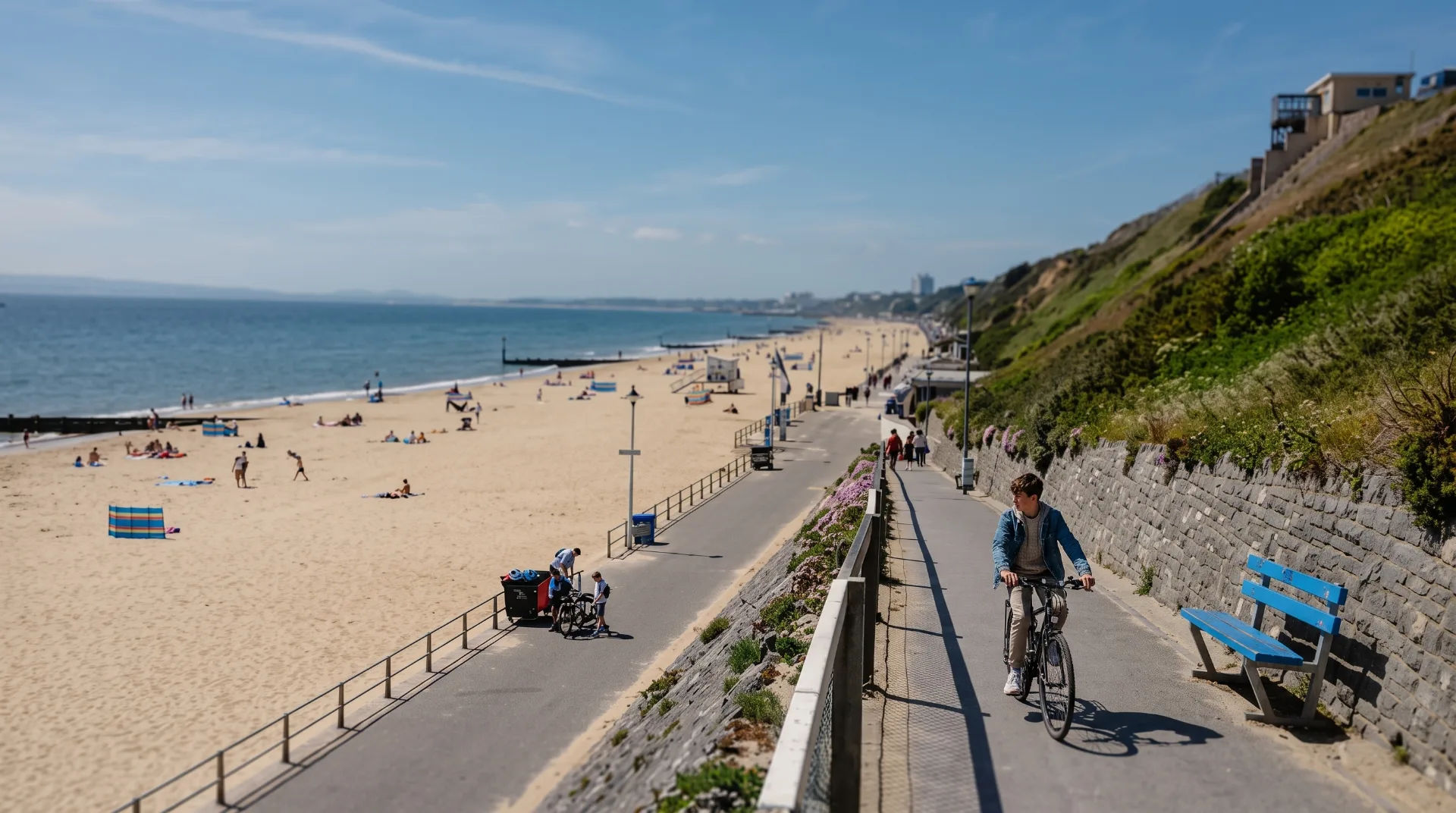
Sea influence on local weather
The English Channel maintains relatively stable temperatures, which reduces temperature extremes. Sea breezes along the seafront help keep summer days comfortable, especially on the beaches. In winter, the sea’s warmth prevents temperatures from dropping too low overnight.
This maritime influence also means that Bournemouth rarely experiences the sharp temperature drops or heat spikes seen in more inland locations. The sea acts as a thermal buffer, making the climate gentler and more predictable. This is a key reason why Bournemouth weather is often described as having a microclimate that is distinct from much of southern England.
Coastal shelter and wind patterns
Bournemouth’s position on the south coast means it benefits from shelter against the prevailing westerly and northwesterly winds that bring rain and storms to much of the UK. The nearby Purbeck Hills and the Isle of Purbeck provide natural barriers that help reduce the force of winds and the frequency of heavy rain.
This sheltering effect means that while other parts of Dorset and the south coast may see stormy weather, Bournemouth often enjoys calmer and drier conditions. This is a significant factor in the town’s popularity as a seaside resort and contributes to its reputation for pleasant Bournemouth weather.
Temperature ranges through the year
Daytime temperatures in Bournemouth vary from around 10°C in the coldest months, January and February, to approximately 21°C in the warmest month, August. Night-time lows typically range from 5°C in winter to 15°C in summer.
Summer temperatures from June to August usually sit between 20°C and 24°C, occasionally rising above 25°C during heatwaves. Spring and autumn months see more variable temperatures, ranging from 12°C to 18°C during the day.
Monthly temperature overview
| Month | Average High (°C) | Average Low (°C) |
|---|---|---|
| January | 10 | 5 |
| April | 14 | 7 |
| July | 21 | 15 |
| October | 15 | 10 |
| December | 10 | 5 |
For more detailed temperature data, see the external detailed temperature page.
Seasonal temperature trends
Spring (March to May): Temperatures gradually rise from early spring lows around 8-10°C to highs reaching 16-18°C by late May. This season is often pleasant for outdoor activities, with mild days and cooler nights, making it a lovely time to enjoy Bournemouth weather.
Summer (June to August): The warmest season, with average highs around 20-24°C. Heatwaves may occasionally push temperatures above 25°C, but the sea breeze often provides relief. Evenings remain comfortably mild, typical of Bournemouth weather in summer.
Autumn (September to November): Temperatures decline steadily from highs in the late teens to early 20s°C in September to around 10-15°C by November. This season can be quite changeable, with a mix of sunny days and wetter spells, reflecting the variable nature of Bournemouth weather in autumn.
Winter (December to February): The coldest months see average highs around 8-10°C and lows rarely falling below freezing. Snow is rare but possible, especially inland. Frosts are less frequent than in northern or inland areas, a feature of Bournemouth weather’s mild winters.
Rainfall and precipitation patterns
Bournemouth receives a moderate annual rainfall of approximately 919 mm. Rainfall is fairly evenly spread throughout the year, with November being the wettest month, averaging 108 mm, and July the driest, with around 57 mm.
Rainfall days are frequent but tend to be light showers rather than prolonged downpours. Snowfall is rare on the coast but can occasionally occur during the coldest months, consistent with typical Bournemouth weather.
Monthly rainfall summary
| Month | Average Rainfall (mm) | Average Rainy Days |
|---|---|---|
| January | 80 | 12 |
| May | 55 | 8 |
| November | 108 | 14 |
| July | 57 | 8 |
Further rainfall details are available at the external Bournemouth precipitation page.
Rainfall characteristics
Bournemouth’s rainfall tends to be light to moderate, with fewer heavy downpours compared to other parts of the UK. This is partly due to the town’s sheltered location and the influence of the English Channel.
Rain showers are often brief and interspersed with sunshine, especially in spring and summer. Autumn and winter bring more persistent rain, with November and December typically the wettest months, shaping the seasonal Bournemouth weather pattern.
Snow is uncommon and usually light when it does fall, rarely causing disruption. The coastal location means temperatures often hover just above freezing, limiting snow accumulation.
Sunshine hours and daylight
Bournemouth enjoys long daylight hours in summer, with July averaging 7.4 hours of sunshine daily. In contrast, December sees just 1.8 hours of sunshine per day on average.
The town’s position on the south coast and its sheltered location contribute to higher sunshine totals than many other parts of the UK. This makes Bournemouth a popular destination for visitors seeking sunny Bournemouth weather.
Monthly sunshine hours
| Month | Average Daily Sunshine (hours) |
|---|---|
| January | 2.0 |
| April | 5.0 |
| July | 7.4 |
| October | 4.0 |
| December | 1.8 |
More information can be found on the external sunshine hours page.
Daylight variations through the year
Bournemouth experiences significant variation in daylight hours between summer and winter, typical of the UK’s latitude.
Summer: In June and July, daylight can last for around 16 to 17 hours, with early sunrises and late sunsets. This extended daylight supports long days on the beach and outdoor activities, highlights of Bournemouth weather in summer.
Winter: December and January see much shorter days, with daylight lasting only about 8 hours. This contributes to the lower sunshine hours and cooler temperatures typical of Bournemouth weather in winter.
The combination of long summer days and high sunshine totals makes Bournemouth especially attractive for visitors during the warmer months.
Humidity levels throughout the year
Humidity in Bournemouth varies from a high of around 91 per cent in January to a low of 73 per cent in April. The coastal location means the air retains moisture, which can make cold days feel chillier but also helps moderate temperature swings, a notable aspect of Bournemouth weather.
Humidity tends to be higher in autumn and winter, contributing to mist and occasional fog, while spring and summer see lower humidity levels.
Monthly average humidity
| Month | Average Humidity (%) |
|---|---|
| January | 91 |
| April | 73 |
| July | 80 |
| October | 85 |
| December | 90 |
For a full breakdown, visit the external humidity levels page.
Effects of humidity on comfort and weather
Higher humidity in winter can make cold temperatures feel more penetrating, increasing the chill factor. It also contributes to the formation of fog and mist, especially in the early mornings and evenings.
In summer, moderate humidity levels combined with sea breezes help keep the air feeling fresh and comfortable. The moisture in the air also benefits the lush greenery of Bournemouth’s gardens and parks, adding to the pleasant Bournemouth weather experience.
Best time to visit Bournemouth for weather
July and August offer the warmest and sunniest conditions, ideal for beach visits and outdoor activities. These months have average highs around 21°C and the longest daily sunshine hours, showcasing the best of Bournemouth weather.
May and June also provide pleasant weather with fewer crowds, daytime temperatures in the mid to high teens Celsius, and moderate rainfall, making these months excellent for enjoying Bournemouth weather without the summer crowds.
Winter months from November to February are cooler and wetter, with shorter daylight hours and average highs around 10°C. These months suit visitors looking for quieter stays or enjoying indoor attractions, when Bournemouth weather is more subdued.
| Season | Weather Summary | Suitability |
|---|---|---|
| Summer | Warm, sunny, low rainfall | Beach holidays, outdoor fun |
| Spring | Mild, occasional showers | Coastal walks, sightseeing |
| Autumn | Cooler, wetter, shorter days | Indoor activities, events |
| Winter | Cold, wet, short daylight hours | Museums, cosy dining |
For a detailed seasonal guide, see our page on when to visit Bournemouth. Check the what’s on calendar for events during your stay.
Tips for different visitor types
Families and beachgoers: Aim for July and August when sea temperatures are warmest and outdoor facilities are fully open, taking full advantage of Bournemouth weather at its best.
Walkers and nature lovers: Spring and early autumn offer mild weather and fewer crowds, ideal for exploring coastal paths and gardens under typical Bournemouth weather conditions.
Cultural visitors: Autumn and winter provide a quieter atmosphere with plenty of indoor attractions, festivals and cosy dining options, when Bournemouth weather is cooler and more settled indoors.
What to pack for Bournemouth’s weather
In summer, bring sun cream and a light jacket for cooler evenings by the sea. The sun’s reflection off the water and sand increases UV exposure despite mild temperatures, a feature of Bournemouth weather to be mindful of.
Spring and autumn require waterproof clothing and sturdy shoes for coastal walks, as showers are common. Winter calls for warm layers, including a coat and hat, especially for outdoor activities like beach strolls, reflecting the seasonal Bournemouth weather.
Visitors planning to swim in the sea should note that water temperatures peak at 18–19°C from late July to September. Early summer and spring swims are colder, so wetsuits are advisable for comfort in typical Bournemouth weather.
Packing checklist by season
Summer: Sun cream, sunglasses, light layers, swimwear, light jacket or jumper for evenings.
Spring/Autumn: Waterproof jacket, umbrella, layered clothing, comfortable walking shoes.
Winter: Warm coat, scarf, gloves, hat, waterproof footwear.
Sea swimming and water temperatures
The English Channel off Bournemouth warms gradually through summer, reaching its peak around late July to September. Water temperatures of 18–19°C are refreshing but manageable for most swimmers, a highlight of Bournemouth weather in summer.
Early summer and spring sea swims can be chilly, with temperatures closer to 12–15°C. Wetsuits are recommended for longer swims or for those sensitive to cold, given typical Bournemouth weather conditions.
Bournemouth’s weather compared to other UK seaside towns
Bournemouth’s south-facing position and sheltered location give it a distinct advantage over many UK seaside resorts. It tends to have:
More sunshine hours than northern or east coast resorts.
Milder winters with fewer frosts and less snow.
More stable temperatures year-round due to the sea’s influence.
Lower average rainfall than many parts of the UK, especially inland.
These factors combine to make Bournemouth one of the most reliable seaside destinations for pleasant Bournemouth weather in the UK.
Planning your visit around the weather
When planning a trip to Bournemouth, consider the weather patterns to make the most of your stay. Check forecasts closer to your visit, especially if you plan outdoor activities like beach days, coastal walks or festivals, to align with the best Bournemouth weather.
Local events often take advantage of the town’s sunny summers, so booking accommodation early for July and August is advisable. Off-peak seasons offer quieter experiences and lower prices but come with more variable Bournemouth weather.
Further information and related pages
For more about Bournemouth’s climate and planning your visit, see the Bournemouth Visitor Information page. To explore activities suited to all weather, visit Things to Do and the Beaches section.