
New Forest

Explore the New Forest, a vast ancient woodland and heathland near Bournemouth. Enjoy walking, cycling, wild ponies and historic villages in this unique Nationa

The New Forest is a large area of ancient woodland, heathland and pasture in southern England, covering about 570 square kilometres across Hampshire and parts of Dorset. It is known for its extensive walking and cycling routes, wild ponies, and a mix of natural habitats managed for conservation and public enjoyment. This page covers the main features of the New Forest, how to explore it, practical travel information, and what makes it a distinctive destination.
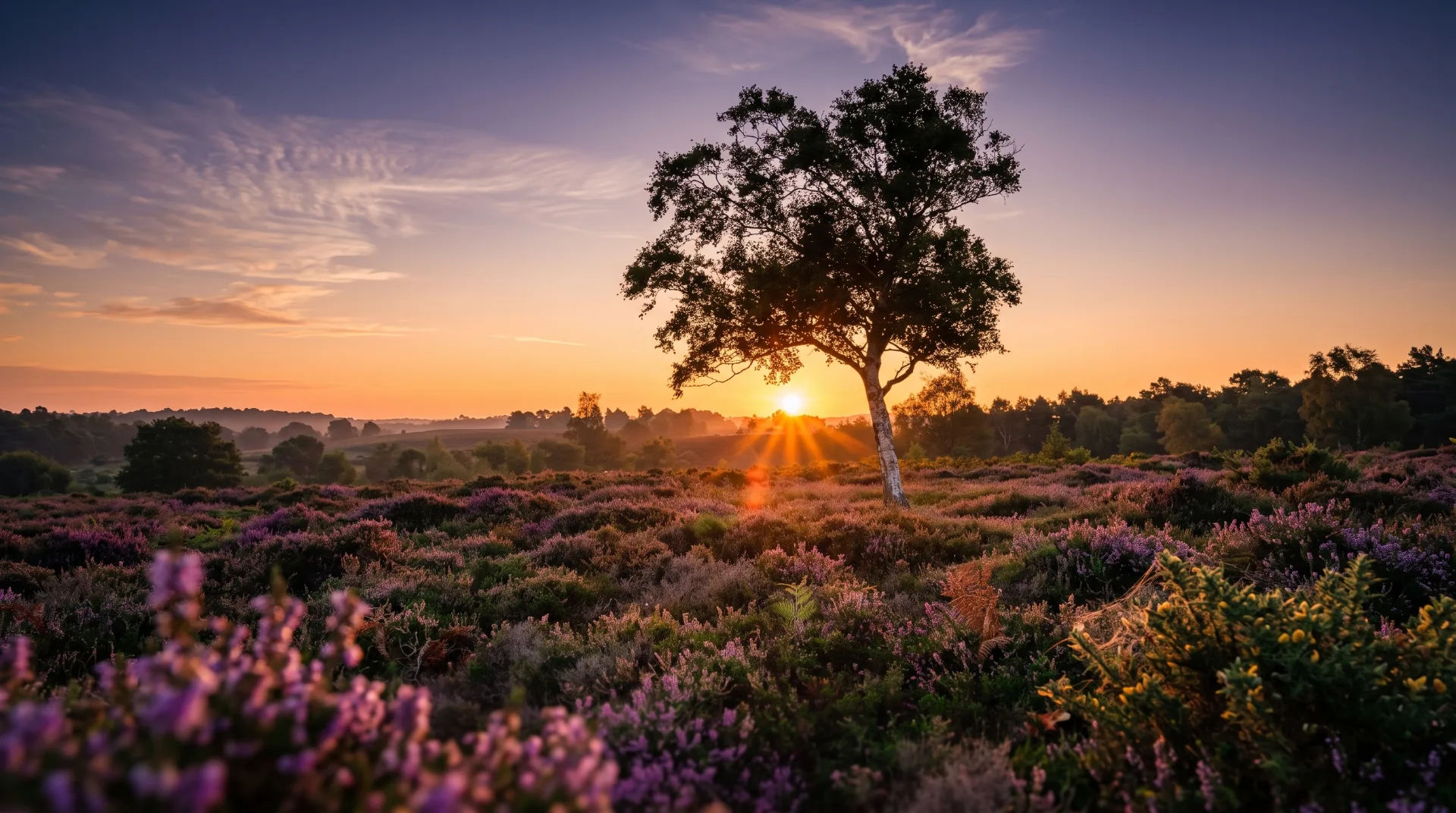
Sunset over a field of purple heather with a lone tree in the foreground
The New Forest showcases stunning sunsets, highlighting its vibrant heather and tranquil landscapes.

What is the New Forest and where is it located

The New Forest National Park was established in 2005 and includes land in Hampshire and a small part of Dorset, west of Bournemouth and Christchurch. It is one of the largest remaining tracts of unenclosed pasture land, heathland and forest in lowland Britain. The area is characterised by ancient woodland, open moors, and traditional villages.

The New Forest is bounded roughly by the towns of Lyndhurst, Brockenhurst, and Fordingbridge in Hampshire, with the western edge extending towards the Dorset border near Christchurch. It lies about 20 miles (32 kilometres) north-west of Bournemouth, making it accessible for day trips or short breaks from the coast.

The landscape is shaped by centuries of commoning, where local people have rights to graze ponies, cattle and other livestock on the open land. The New Forest ponies are a famous sight, roaming freely throughout the area.

Main attractions and activities in the New Forest

Visitors to the New Forest can enjoy a wide range of outdoor activities and cultural sites. Walking and cycling are popular, with over 140 miles (225 kilometres) of marked trails and quiet lanes. The terrain varies from flat heathland to gentle hills, suitable for all levels.

Wildlife watching is a key draw, with opportunities to see New Forest ponies, deer, rare birds such as nightjars and woodlarks, and a variety of butterflies and dragonflies. The area is also important for its ancient trees and wildflower meadows.

Historic villages such as Brockenhurst, Lyndhurst and Beaulieu offer shops, cafes and museums. Beaulieu is home to the National Motor Museum, which displays a large collection of historic vehicles. The nearby Beaulieu Palace House and Abbey ruins add to the heritage attractions.

Other points of interest include Exbury Gardens, a 200-acre woodland garden famous for rhododendrons and azaleas, and the New Forest Wildlife Park near Ashurst, which specialises in native species conservation.
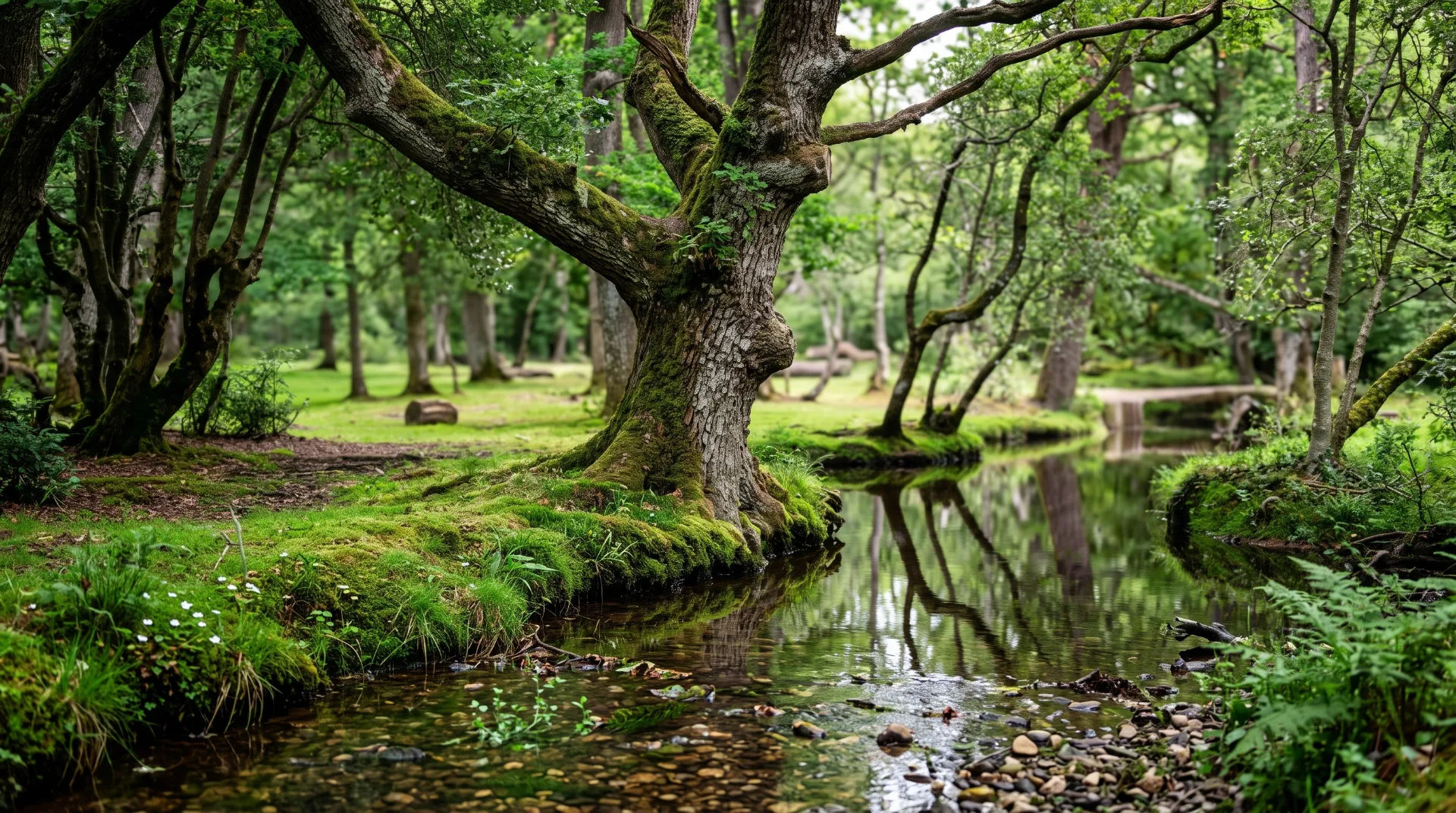
A serene stream winding through lush greenery and moss-covered trees in the New Forest.
The New Forest showcases its natural beauty with a tranquil stream and vibrant foliage, perfect for nature lovers.

How to get to the New Forest from Bournemouth

The New Forest is easily reached from Bournemouth by car or public transport. By road, the journey takes about 30 to 40 minutes via the A338 and A31, depending on the destination within the forest.

Regular train services run from Bournemouth station to Brockenhurst, a central village in the New Forest, with a journey time of around 20 minutes. From Brockenhurst, local buses and cycle routes connect to other parts of the forest.

For those without a car, cycling from Bournemouth to the New Forest is possible but requires a longer ride of approximately 25 miles (40 kilometres) along quiet roads and cycle paths.

Best times to visit the New Forest

The New Forest is accessible year-round, but the best time to visit is from late spring to early autumn (May to September). During this period, the weather is milder and the natural landscape is at its most colourful, with wildflowers in bloom and active wildlife.

Summer months bring more visitors, so weekdays and early mornings are quieter times to explore. Autumn offers changing leaf colours and fewer crowds, while winter is peaceful but colder, with some facilities closed.

Events such as the New Forest and Hampshire County Show in July and seasonal markets add interest during the warmer months.
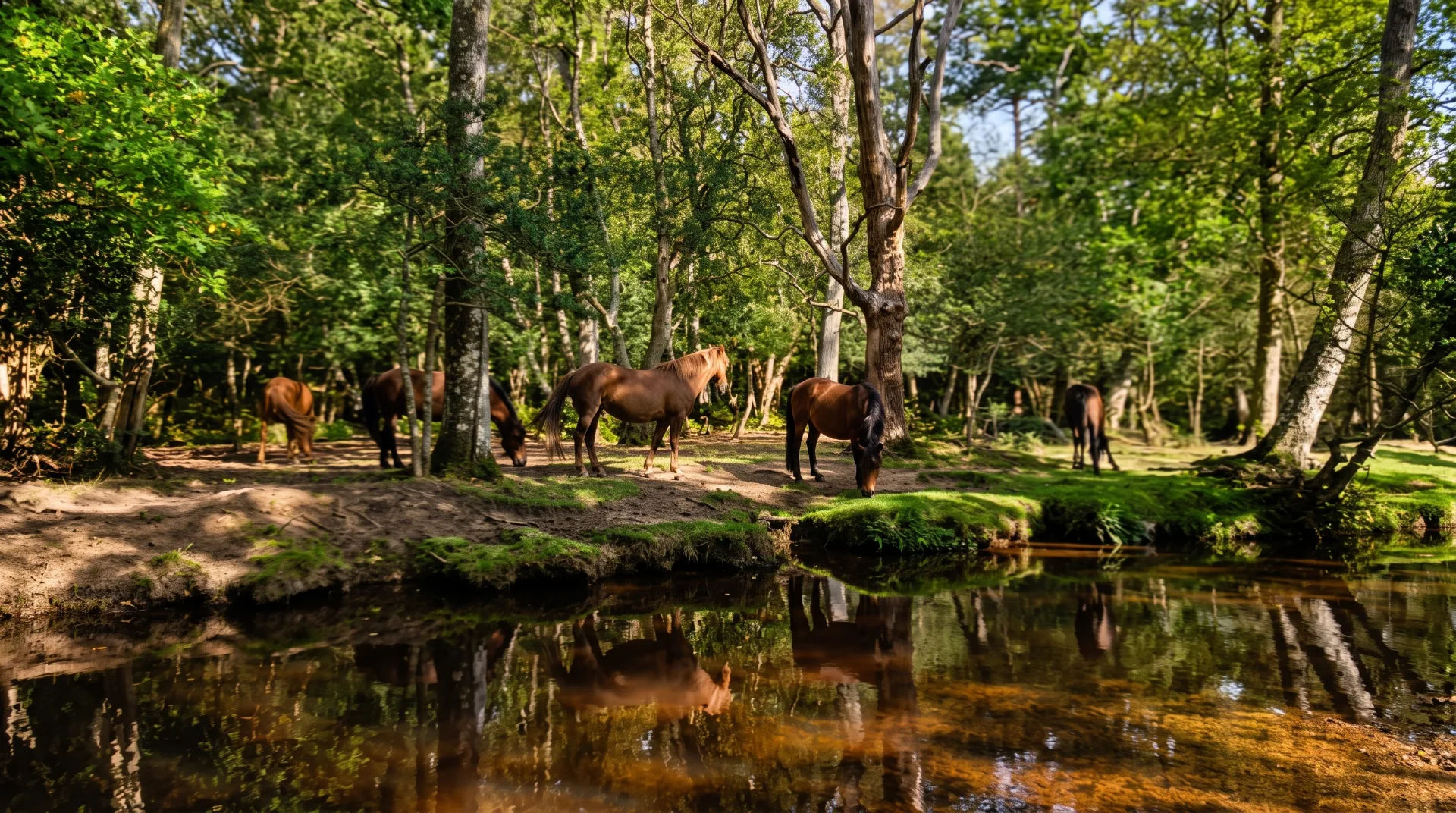
Several brown horses grazing near a stream surrounded by lush green trees in the New Forest
The New Forest is home to free-roaming horses, adding to its natural charm and beauty.

Accommodation options near the New Forest

Accommodation around the New Forest ranges from campsites and holiday parks to hotels and self-catering cottages. Popular villages like Lyndhurst and Brockenhurst have a range of guesthouses and inns.

For longer stays, self-catering cottages and holiday homes provide a base for exploring the wider area. The nearby town of Christchurch offers additional hotel options and is about 10 miles (16 kilometres) from the forest edge.

Conservation and visitor guidelines in the New Forest

The New Forest is a protected National Park with sensitive habitats and wildlife. Visitors are encouraged to follow guidelines to minimise impact, such as keeping dogs on leads near livestock, not feeding ponies, and using marked trails.

The Forestry Commission and National Park Authority provide information on responsible access and seasonal restrictions to protect breeding birds and fragile plants.

Visitors should also be aware of the commoning practices and respect the rights of commoners who manage the land and animals.
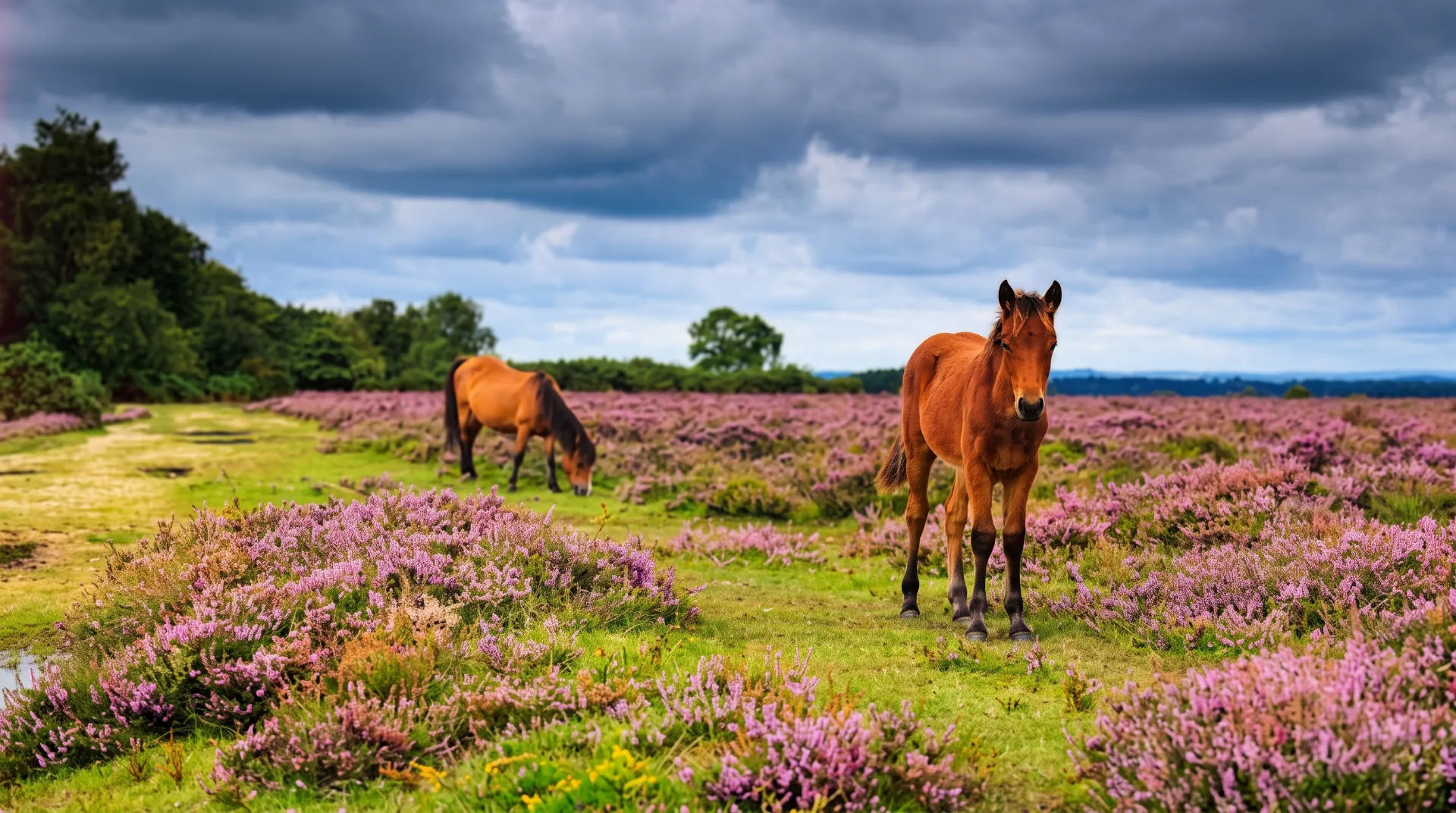
Two brown horses grazing among vibrant purple heather under a cloudy sky in the New Forest
The New Forest showcases its natural beauty with horses grazing amidst blooming heather, set against a dramatic sky.

Where to find more information about the New Forest

For detailed maps, events and visitor information, the official New Forest National Park website offers comprehensive resources. Local tourist information centres in Lyndhurst and Brockenhurst provide brochures and advice.

The New Forest is also covered in the Things to Do section of this site, with guides to walking, cycling and attractions. For accommodation options, see Where to Stay.

For background on the area’s history and environment, the Wikipedia page on New Forest is a useful reference.

Explore

More in this section

  • Beyond the Beach Explore Bournemouth beyond the beach with gardens, watersports, cultural venues, shopping and dining districts. Find family-friendly activities and outdoor adve
  • Bournemouth in Spring Explore Bournemouth in spring with colourful gardens, quieter beaches and seasonal events. Enjoy peaceful walks, family fun and great value stays before summer
  • Bournemouth in Summer Explore Bournemouth in summer with seven miles of sandy beaches, the famous Air Festival, lively evening entertainment, and plenty of watersports and family act
  • Bournemouth in Winter Experience Bournemouth in winter with its festive Christmas Tree Wonderland, seasonal markets, peaceful beach walks and cosy off-season accommodation options.
  • Countryside Bournemouth’s countryside offers heathland, woodland, rivers and coastal cliffs close to town. Enjoy walking, cycling, wildlife watching and historic sites near
  • History of Bournemouth Explore Bournemouth’s transformation from open heathland to a thriving Victorian seaside resort, its expansion, cultural growth, and modern coastal economy.
  • South Coast Explore England's South Coast, from Bournemouth's sandy beaches to historic Portsmouth and the Jurassic Coast. Find travel tips, top towns and seasonal highligh
  • Towns Explore the main towns near Bournemouth, Dorset, each with unique charm, attractions, shopping and dining. Find transport options and accommodation for perfect
  • Villages Bournemouth’s villages each offer distinct charm with local shops, dining, beaches and community spirit just minutes from the town centre and coast.
Common questions

Frequently asked questions

What is the New Forest and where is it located?

The New Forest is a large area of ancient woodland, heathland and pasture in southern England, covering about 570 square kilometres across Hampshire and parts of Dorset. It includes unenclosed pasture land, open moors and traditional villages. The National Park lies roughly between the towns of Lyndhurst, Brockenhurst and Fordingbridge, extending towards the Dorset border near Christchurch, about 20 miles north-west of Bournemouth.

What activities and attractions can visitors enjoy in the New Forest?

Visitors can enjoy over 140 miles of walking and cycling trails suitable for all levels, wildlife watching including New Forest ponies, deer and rare birds, and exploring historic villages such as Brockenhurst, Lyndhurst and Beaulieu. Beaulieu features the National Motor Museum, Palace House and Abbey ruins. Other attractions include Exbury Gardens and the New Forest Wildlife Park near Ashurst.

How can I get to the New Forest from Bournemouth?

The New Forest is accessible by car in about 30 to 40 minutes via the A338 and A31 roads. There are regular train services from Bournemouth station to Brockenhurst, taking around 20 minutes, with local buses and cycle routes connecting to other parts of the forest. Cycling from Bournemouth is also possible but involves a longer ride of approximately 25 miles along quiet roads and cycle paths.

When is the best time to visit the New Forest?

The best time to visit is from late spring to early autumn, between May and September, when the weather is milder and the landscape is colourful with wildflowers and active wildlife. Summer is busier, so visiting on weekdays or early mornings is quieter. Autumn offers changing leaf colours and fewer crowds, while winter is peaceful but colder with some facilities closed.

What accommodation options are available near the New Forest?

Accommodation ranges from campsites and holiday parks to hotels, guesthouses and self-catering cottages. Popular villages like Lyndhurst and Brockenhurst offer a variety of inns and guesthouses. For longer stays, self-catering cottages and holiday homes provide a good base. Christchurch, about 10 miles from the forest edge, offers additional hotel options.

Are there any guidelines for visitors to the New Forest?

Yes, as a protected National Park with sensitive habitats, visitors should follow guidelines to minimise impact. This includes keeping dogs on leads near livestock, not feeding ponies, and sticking to marked trails. The Forestry Commission and National Park Authority provide information on responsible access and seasonal restrictions to protect wildlife and plants. Respect for commoning practices and the rights of commoners is also important.

Where can I find more information about the New Forest?

Detailed maps, events and visitor information are available on the official New Forest National Park website. Local tourist information centres in Lyndhurst and Brockenhurst provide brochures and advice. This site’s Things to Do section offers guides on walking, cycling and attractions, while the Where to Stay section covers accommodation. The Wikipedia page on New Forest is also a useful reference.

Planning your visit?

Where to stay in Bournemouth

Clifftop hotels, serviced apartments a street back from the sand and the quieter beds out at Southbourne, with the areas each one suits.

Where to stay →